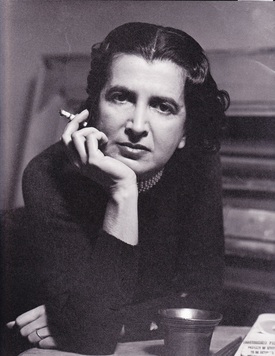
Georges Voronoff was born on 7 April 1873, in Voronej/Voronezh, Russia. A doctor by training, he and his wife, Andree, lived in Paris, at 132, rue de Tocqueville. They also had a house called ‘Villa Minorange,’ in Mougins, Alpes-Maritimes. Georges Voronoff was arrested, sent to Drancy, and deported to Auschwitz on train number 60 of 7 October 1943. His wife, Andree, was last notified that he was alive at Auschwitz on 15 January 1945. Presuming that he was, Georges Voronoff was most likely evacuated from Auschwitz with thousands of other prisoners on 18 January 1945 who were marched towards camps inside the Reich. There are subtle hints in the records of the International Tracing Service, at Bad Arolsen, Germany, that Georges Voronoff might have been part of a group headed towards Buchenwald. Regardless, he did not survive the ordeal.
10 objects were removed from the former Voronoff residence at 132, rue de Tocqueville, in Paris, notwithstanding the significant book collection that they held. A number of gold items were seized at the villa in Mougins.
In March 1947, most items were returned by the French postwar restitution authorities to Georges Voronoff’s widow, Mme. Andree Voronoff. There were, however, some notable exceptions, which leaves one perplexed:
VOR 6: This painting by an artist associated with Hyacinthe Rigaud never left the Jeu de Paume. Its fate is unknown. It was either removed by one of the members of the ERR staff for personal gain or handed over to a Paris dealer for resale as was frequently the case in those heady days of the wartime Paris art market.
VOR 8: A painting by Christian Wilhelm Ernst Dietricy. It was found by Allied troops at the Nazi art depot in the Austrian mountains known as Alt-Aussee, to which the painting had been sent, most likely from Fussen, on 27 October 1944. The painting went to the Munich Central Collecting Point (MCCP) from which it was repatriated to France on 25 June 1946. After that, it’s a total mystery as to why there is no record of its restitution by the French government to Voronoff’s widow.