• Home
  • Blog
  • Contact
  • Our Team
    • Legal Counsel
  • Cookie Policy (US)
Menu
  • Home
  • Blog
  • Contact
  • Our Team
    • Legal Counsel
  • Cookie Policy (US)
Subscribe
June 20, 2011

The Leopold Museum in Vienna has just settled another looted art case with the family of a former Czech citizen from Brno, Moriz Eisler.

Several points stand out in the way in which the story was reported by Catherine Hickley for Bloomerg News.

  1. the Leopold Museum presumes that the works in its collection were acquired in good faith. That stance alone is extraordinary in view of the checkered history of its late founder, Dr. Rudolpf Leopold, who amassed a collection of works by Schiele that had once belonged to Jewish families. And he, like anyone else, was well aware of what had happened to those families.

    Good faith usually means that the acquirer of the work of art did not ask questions and did not really worry about the origin of the art object that he or she was purchasing.  In most cases, good faith rested on willful ignorance, writ large, ignorance of history, ignorance of the past, ignorance of one’s environment, ignorance of the fact that twelve years of Nazi rule, a Holocaust, and a global war, occurred which might have disrupted the normal chains of ownership and cost the lives of the owners of the works being acquired “in good faith.”

    As the 1960s saying goes, “ignorance is bliss.”

  2. Since Dr. Leopold’s death last year, his son, Diethard Leopold, pledged to settle all outstanding claims against the Leopold Museum pertaining to looted art from the Holocaust era. Although he is making good on his pledge, settling is not restituting. Moreover, the strategy of settlement is predicated on his argument that the Museum holds art acquired in good faith. Had it not been purchased in good faith, the legal strategy might be a bit different or, at least, more exacting on the Museum. There is nothing new in waving money at claimants, especially when the alternative, seeking restitution, can become very costly due to the refusal of cultural institutions like the Leopold Museum to even consider restitution as a plausible means of “doing the right thing.” Look at how long it took to settle the “Walli’ case.

If the Leopold family’s settlement strategy is a harbinger of things to come, few works of art will be restituted to their rightful owners.

The question of the day is:

Does the offer of a financial settlement carry within it the denial of restitution?

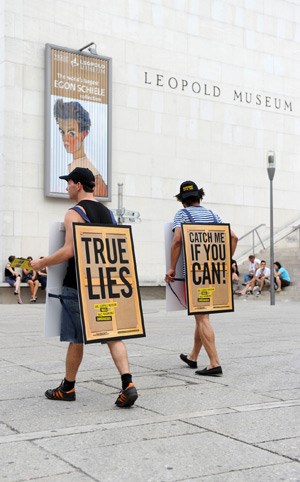
“Protestaktion vor dem Leopold Museum: ‘Restituieren!'”,  22 Jun 2011
Source: Der Standard
“Protestaktion vor dem Leopold Museum: ‘Restituieren!'”, 22 Jun 2011
Source: Der Standard
“Protestaktion vor dem Leopold Museum: ‘Restituieren!'”, 22 Jun 2011
Source: Der Standard
“Protestaktion vor dem Leopold Museum: ‘Restitueren!'”, 22 Jun 2011
Source: Der Standard
Share
cameronav23
cameronav23

Related posts

June 11, 2015

My Favorite Rant: on Education, Restitution and the Culture of Museums


Read more
June 16, 2014

Provenance research—now and later (First installment)


Read more
April 30, 2012

Wild Weekend with Wally-Part Two


Read more
Cookie Consent
We use cookies to optimize our website and our service.
Functional Always active
The technical storage or access is strictly necessary for the legitimate purpose of enabling the use of a specific service explicitly requested by the subscriber or user, or for the sole purpose of carrying out the transmission of a communication over an electronic communications network.
Preferences
The technical storage or access is necessary for the legitimate purpose of storing preferences that are not requested by the subscriber or user.
Statistics
The technical storage or access that is used exclusively for statistical purposes. The technical storage or access that is used exclusively for anonymous statistical purposes. Without a subpoena, voluntary compliance on the part of your Internet Service Provider, or additional records from a third party, information stored or retrieved for this purpose alone cannot usually be used to identify you.
Marketing
The technical storage or access is required to create user profiles to send advertising, or to track the user on a website or across several websites for similar marketing purposes.
Manage options Manage services Manage {vendor_count} vendors Read more about these purposes
Preferences
{title} {title} {title}