
by Marc Masurovsky
One of the advantages of being at war is that there are three sides-the Allies, the enemy and the non-belligerents or “neutrals.” In the case of WWII, we will only focus on the Allies and the enemy. The United States remained neutral or non-belligerent until it was bombed into entering the war through the somewhat reckless and deceitful Japanese airborne attack on Pearl Harbor on December 7, 1941. Thereafter, the enemy was clearly delineated as being the Axis Powers—the Japanese Empire, the Greater German Reich, and Mussolini’s Italy.
Meanwhile, in preparation for that day when the US would enter the European war, US President Franklin D. Roosevelt had issued a raft of executive orders aimed at protecting US consumers and producers from the evil Axis powers and their perfidious attempts at penetrating and influencing the American economy and altering the American way of life forever. One of those many decisions aimed at seizing, confiscating, vesting “enemy” property or property suspected of being “enemy-owned or controlled.” In the end, it did not really matter. The Alien Property Custodian at the Department of the Treasury would be the administrator of such seized property.
Art objects seized by the US government between 1941 and 1945 turned out to be a boon for the American art market, especially art galleries and museums. The fact that an art object entering the US could have an “Axis” provenance, in other words, it could belong to an “enemy national”, most often German, Austrian, Italian, Japanese. Apparently, the US government did not wait too long before it decided to sell off these seized objects, to the great despair of its rightful owners. Here are some examples.
Antiquities
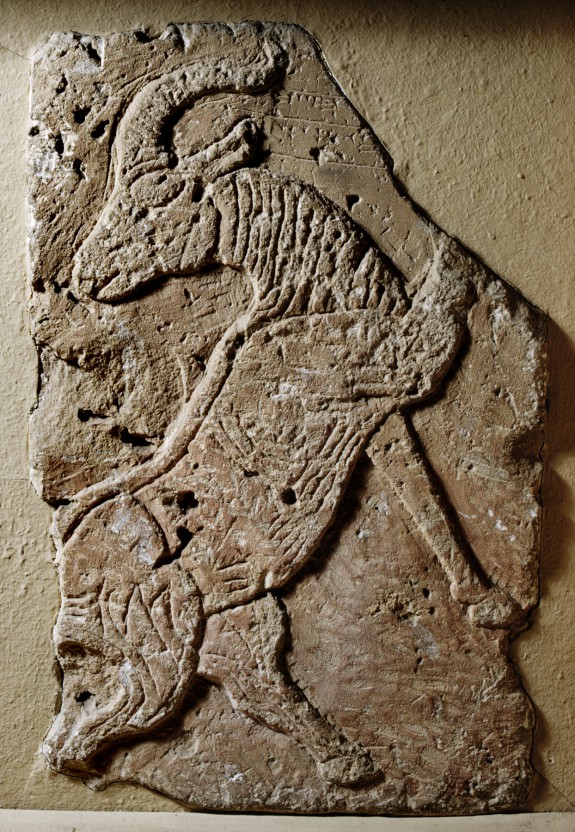
The Baltimore-based Walters Art Museum acquired a Syrian antiquity which had a pre-WWII provenance indicating a German national, Max von Oppenheim. Confiscated in 1943, it was sold to the Walters in 1944 with some assistance from the Metropolitan Museum of Art.
German Expressionists
On the Expressionist end of the artistic spectrum, the Museum of Modern Art did very well with objects confiscated from Karl Buchholz, a German-born art dealer who emigrated to the US in the mid-1930s, but not without having already cashed in on the emerging bonanza created by Nazi purges of “degenerated” works of art. His collection was vested or frozen and confiscated by the Alien Property Custodian in 1944, and its contents sold incrementally through the 1940s and early 1950s.
For those who are interested, if the Alien Property Custodian appears in the provenance of an art object, you know that it was confiscated and sold off as “enemy property.” No questions asked.