
 |
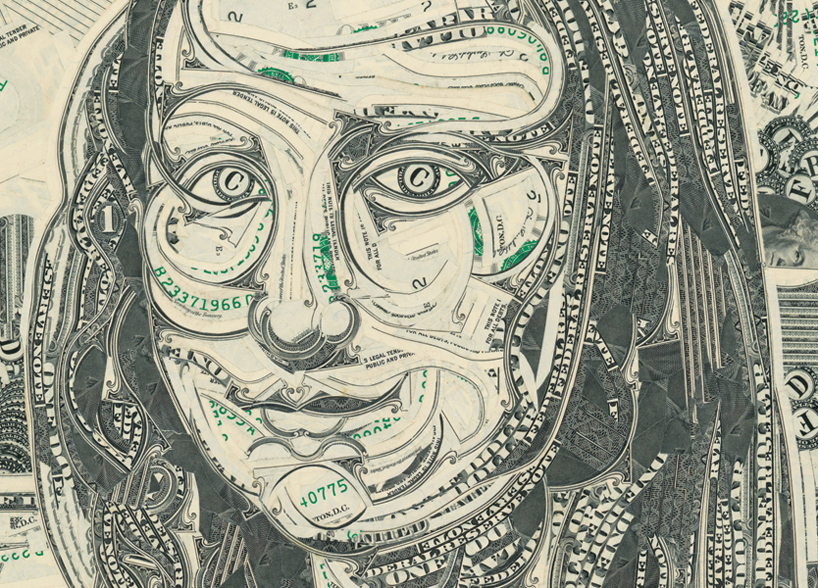
| Detail of Mark Wagner’s Currency College of the Mona Lisa Source: DesignBoom |
Published by Bloomsbury, it is edited by Anne Dempster (Sotheby’s Institute of Art). Contributors include Tom Christopherson (Sotheby’s Europe), Anders Petterson (ArtTactic), Olav Velthuis (University of Amsterdam), Hans J. Van Miegroet and Neil DeMarchi (Duke University), Marina Bianchi (University of Cassino), Rachel Pownall (University of Tilburg/University of Maastricht), Elroy Dimson (London Business School), Steve Satchell and Nandini Srivastava (Cambridge University), Christophe Spaenjers (HEC Paris), Laurent Noel (Audencia Nantes School of Management), and Arjo Klamer (Erasmus University).
The book takes a multidisciplinary approach, through alternative investments, art history, behavioral economics, cross-cultural studies, due diligence, macro- and microeconomics, Modern Portfolio Theory, emerging markets, provenance research and many other topics. It is highly recommended to anyone with an interest in the international art market.
Petterson’s discussion of how the Internet has changed the art market was robust. His description of the art market ecosystem and how it is adapting in light of online galleries, artist portals, social media, blogs, online auction/art fairs, online inventory management, price databases, indices, investors, art funds and wealth management, showed that there is both a new audience and desire for transparency. In creating a more educated consumer, both traditional and upcoming entities have nothing to lose and everything to gain. Petterson’s article is a treatise against all those that desire not to adapt to provenance standards in the market.
Flynn’s discussion of the role of government and private corporations in art commissioning showed that more needs to be done in regards to authentication of art in the public space. What was striking about the article was that it showed a dissonance between corporate views on art and the industry, itself. A clear conclusion was that, in desiring to imagine itself as an ‘exception’ to business, the art world has only done itself more harm. As both a lecturer with the Association for Research into Crimes against Art and also in hosting a blog titled ArtKnows, Flynn, continues to be frontier of these discussions.
Satchell and Srivastava’s derivations about wealth and utility, adding upon Pownall’s essay, showed that there is still much more to connect between mathematical models, financial markets, and the art world. Integration of Veblen’s Theory of the Leisure Class, the price and wealth effects of Marshallian demand, attempts at indexation – whether through the Financial Times All Shares (FTAS) and the London All Art price index or the Mei-Moses index – the Miller-Modigliani capital structure theorem, and the aesthetic dividend, make the reader wonder if the time is here for further data integration with the Standard & Poor’s and Thomson Reuters of the financial world.